Start Your Career in Massage Therapy: What You Need to Know
Massage therapy is a rewarding career that combines practical skills, wellness, and meaningful connections with people. As more people seek professional massage services for relaxation, stress management, fitness recovery, and overall well-being, the demand for trained massage therapists continues to grow.
If you’re considering massage therapy as a career, understanding the training, skills, career opportunities, and professional requirements can help you make the right decision.
What Is Massage Therapy?
Massage therapy involves using hands-on techniques to manipulate muscles and other soft tissues of the body. Depending on their training, massage therapists may use different techniques designed to promote relaxation, improve mobility, reduce muscle tension, and support general wellness.
A professional massage therapist needs more than good hand skills. Knowledge of anatomy, physiology, body mechanics, hygiene, client communication, and professional ethics is essential for providing safe and effective services.
Why Choose a Career in Massage Therapy?
A career in massage therapy can offer several benefits:
- Meaningful Work: Help clients relax, feel better, and support their wellness goals.
- Flexible Career Options: Work in spas, wellness centers, clinics, hotels, fitness facilities, or private practice.
- Growing Wellness Industry: Increasing interest in health, wellness, and self-care creates opportunities for trained professionals.
- Personal Interaction: Build professional relationships and work directly with clients.
- Entrepreneurial Opportunities: Experienced therapists may establish their own massage practice or wellness business.
What Training Do You Need?
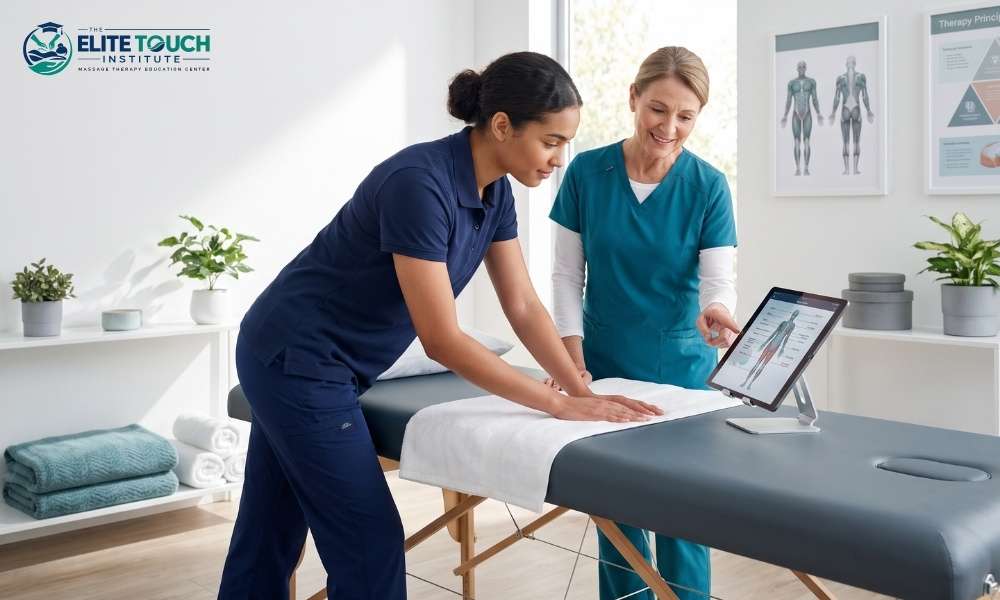
Professional training is an important first step. A quality massage therapy program typically combines classroom learning with practical, hands-on training.
Common areas of study include:
Anatomy & Physiology
Learn how the body’s muscles, bones, joints, and systems work together. This knowledge helps therapists understand the body and provide appropriate massage techniques.
Massage Techniques
Students learn fundamental techniques such as effleurage, petrissage, compression, friction, stretching, and other massage methods depending on the program.
Client Assessment
Understanding a client’s needs, concerns, goals, and relevant health information is an important part of professional practice.
Health, Hygiene & Safety
Proper sanitation, infection-control practices, body mechanics, and professional safety procedures help create a safe environment for both therapist and client.
Professional Ethics & Communication
Successful massage therapists need strong communication skills and must understand professional boundaries, confidentiality, client consent, and ethical responsibilities.
What Skills Make a Good Massage Therapist?
Technical knowledge is only part of the profession. Successful massage therapists often develop:
- Strong communication skills
- Good listening abilities
- Attention to detail
- Professionalism and reliability
- Empathy and a client-focused attitude
- Physical stamina and proper body mechanics
- A commitment to continuous learning
Developing these skills can help you create a positive experience for clients while building a strong professional reputation.
Where Can Massage Therapists Work?
After completing appropriate training and meeting applicable local requirements, massage therapists can explore a variety of career environments, including:
- Spas and wellness centers
- Massage therapy clinics
- Hotels and resorts
- Fitness and rehabilitation facilities
- Health and wellness centers
- Cruise ships and hospitality businesses
- Private practice
- Corporate wellness programs
Your career path may depend on your qualifications, location, experience, and professional interests.
Certification and Licensing
Requirements for practicing massage therapy vary depending on your country, state, or local jurisdiction. Some locations require specific educational hours, examinations, registration, certification, or professional licensing.
Before enrolling in a program, research the requirements that apply where you plan to work. Choosing a training program that aligns with recognized professional standards can make your career pathway easier to navigate.
How to Start Your Massage Therapy Career
A simple career pathway can look like this:
1. Research the Profession
Learn about massage therapy, career opportunities, training requirements, and the type of work involved.
2. Choose a Quality Training Program
Look for a program that provides both theoretical knowledge and practical hands-on experience.
3. Build Your Practical Skills
Regular practice is essential for developing confidence, technique, communication, and professional client care.
4. Complete Required Certification or Licensing
Follow the requirements applicable to your location and intended area of practice.
5. Gain Professional Experience
Working in a spa, clinic, wellness center, or similar environment can help you develop valuable real-world experience.
6. Continue Learning
Massage therapy is a field where ongoing education can help you expand your knowledge and professional opportunities.
Is Massage Therapy the Right Career for You?
Massage therapy can be an excellent choice for people who enjoy working with others, have an interest in health and wellness, and want a hands-on career. However, the profession also requires physical effort, professionalism, patience, and a strong commitment to client safety.
If you enjoy helping people and are willing to develop your skills through proper education and practice, massage therapy may provide a fulfilling career path.
Start Building Your Future Today
Starting a career in massage therapy is an investment in professional skills that can open doors to opportunities across the wellness, hospitality, fitness, and healthcare-related industries.
The right education, hands-on practice, professional attitude, and commitment to lifelong learning can give you a strong foundation for success.
Ready to begin your journey into massage therapy? Explore professional training opportunities and take the first step toward building a rewarding career in wellness.