In healthcare education, theoretical knowledge is only one part of becoming a confident and capable healthcare professional. Students may learn anatomy, patient care, medical procedures, and clinical concepts in the classroom, but hands-on clinical training is where that knowledge comes to life.
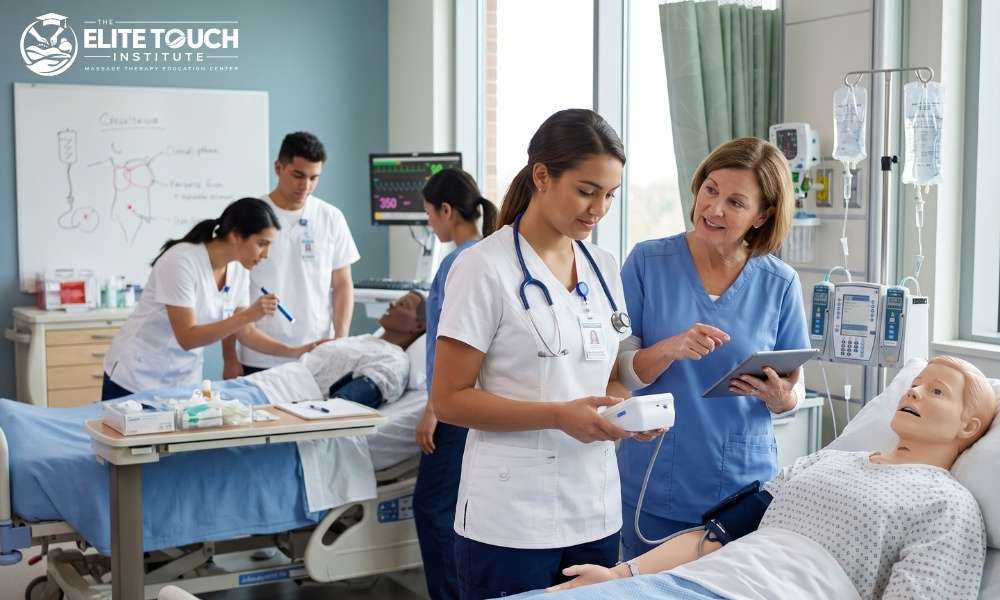
Clinical training gives students the opportunity to practice their skills in real or simulated healthcare environments under the guidance of experienced instructors and clinical professionals. It helps bridge the gap between learning and doing—and prepares students for the responsibilities they will face in their future careers.
Bridging the Gap Between Theory and Practice
Classroom learning provides students with the essential knowledge they need to understand healthcare principles. However, knowing a procedure and performing it correctly are two different things.
Hands-on training allows students to apply what they have learned by practicing essential clinical skills, following proper procedures, communicating with patients, and responding to different healthcare situations.
This practical experience helps students understand how theoretical concepts are applied in real-world clinical settings.
Building Confidence and Professional Skills
Confidence is an important quality for healthcare professionals. Students can become more comfortable with clinical procedures through repeated practice and supervised experience.
Clinical training helps students develop skills such as:
- Patient assessment and communication
- Vital signs monitoring
- Infection prevention and control
- Safe patient handling
- Basic clinical procedures
- Teamwork and collaboration
- Professional communication
- Time management and responsibility
With proper supervision and regular practice, students can gradually become more confident in their ability to provide safe and compassionate patient care.
Learning to Work in Real Healthcare Environments
Healthcare environments can be fast-paced and unpredictable. Clinical exposure helps students understand what it is like to work as part of a healthcare team.
Students learn how nurses, doctors, technicians, and other healthcare professionals communicate and collaborate to support patients. They also gain experience managing responsibilities, following safety protocols, maintaining professionalism, and adapting to different situations.
These experiences are difficult to replicate through classroom instruction alone.
Developing Critical Thinking and Decision-Making
Healthcare professionals frequently need to assess situations and make appropriate decisions. Hands-on clinical training encourages students to observe patients, identify potential concerns, communicate effectively, and determine appropriate actions under supervision.
Instead of simply memorizing information, students learn to think critically and apply their knowledge to practical situations.
Understanding Patient-Centered Care
Clinical training also teaches an important lesson: every patient is different.
Students interact with people with different needs, backgrounds, conditions, and concerns. These experiences help them develop empathy, patience, communication skills, and respect for patient dignity.
Through real-world interaction, students begin to understand that quality healthcare is not only about performing procedures—it is also about treating every patient with compassion and respect.
Learning From Experienced Instructors
Supervised clinical practice gives students the opportunity to learn directly from experienced instructors and healthcare professionals.
Instructors can observe students, provide immediate feedback, correct mistakes, demonstrate proper techniques, and encourage continuous improvement. This guidance helps students build good clinical habits while maintaining patient safety.
Preparing Students for Their Future Careers
One of the most important benefits of hands-on clinical training is career preparation. Students who regularly practice their clinical skills are better prepared to transition from the classroom into professional healthcare environments.
Clinical experience can help students become more adaptable, responsible, and prepared to handle the practical demands of their chosen profession.
Conclusion
Hands-on clinical training is an essential part of quality healthcare education. It transforms theoretical knowledge into practical skills, builds confidence, strengthens critical thinking, and prepares students for real-world professional responsibilities.
At [Institute Name], we believe that effective healthcare education should combine strong academic foundations with meaningful practical experience. By providing students with opportunities to learn, practice, and grow in supervised clinical environments, we help prepare the next generation of competent, confident, and compassionate healthcare professionals.